
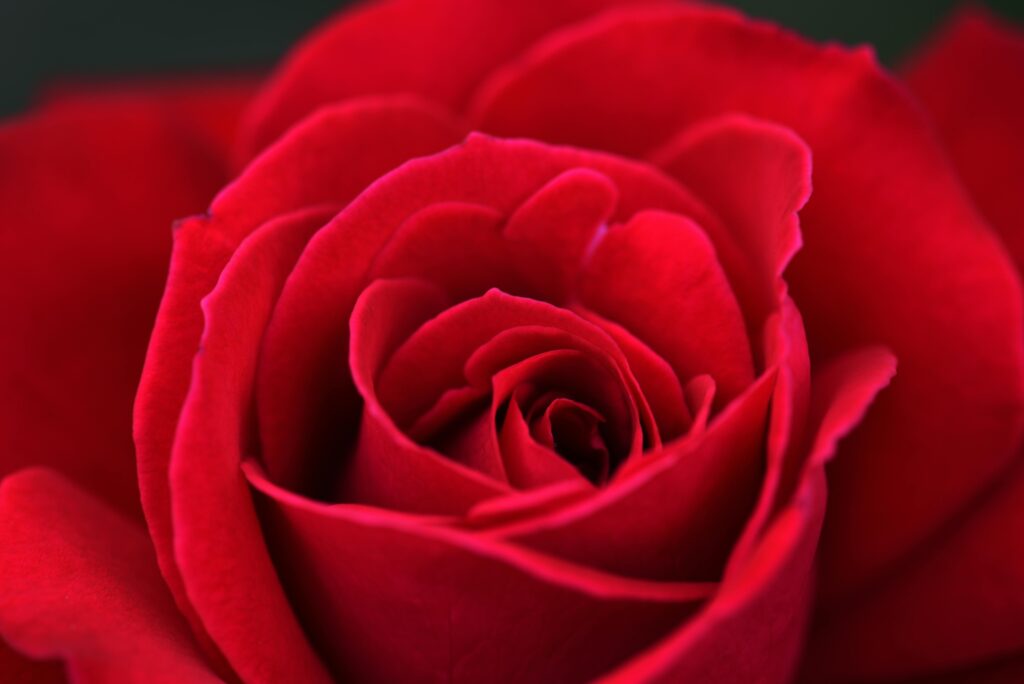
Between utter softness and fierce protection, exquisite beauty and sharp thorns, between wild becoming and refined cultivation, intoxicating scent and enticing elegance, this most beloved flower has become associated with queens and with goddesses, with Spring and with sensuality, with passion and eroticism, with love and with mysticism. Rose meaning and symbolism root in our psyche as an ancient story that weaves nature’s creation with culture’s refinement.
The meaning of Rose in stories and in art is age old and ever renewed, rich and flavorful, revealing and concealing magic and mystery in its folds.
The rose is a woody perennial plant with gorgeous flowers that carry an intoxicating scent, and an antioxidant fruit (rosehip) loaded in vitamin c.
The History of the Rose: Origin and Cultivation
Rose has been on the planet for a long time. Some rose fossils are as old as 35 million years. It is thought to be native to Asia, but it has grown wildly all over the Northern Hemisphere – from Asia to Europe through North America and Northwest Africa.
Remains of rose petals have been found in ancient sites all over North America – some dated between twenty to forty thousand years old – which tells us that Native Americans have used wild rose for ceremony and medicine long before the cultivation of the plant began in Asia and in the Middle East.
Its beauty and medicine – spiritually, emotionally, mentally, and physically – was widely recognized in ancient cultures. It was loved and appreciated as a wild plant before it was cultivated, before it flourished as a symbol of beauty, love, and passion.
From Wild Roses to Cultivated Beauty, Sacred Offerings, and Healing Arts
Humans began to cultivate roses around 5000 years ago. Some sources say that the rose was first cultivated in Persia. Other sources say it was first cultivated in China. It is realistic to consider that it happened in both places around the same time.
The rose has been a sacred flower in the Middle East and the Mediterranean since ancient times; an important ingredient in Middle Eastern (especially in Persian) cooking, used for cosmetics, for perfumes, and for medicine.
It was loved and used in Ancient Mesopotamia. Roses are known to have been grown in ancient Babylon. Dating back to at least 2860 BCE, Ancient Sumerian Cuneiform Tablets confirm that roses were used in religious ceremonies, grown in temple gardens, and offered to the goddess Inanna, and used in sacred ceremonies of marriage.
Paintings of roses have been found in Ancient Egyptian tombs from the 14th century BCE. Ancient Egyptians used rose extracts for perfumes. They also bathed in rose water. Roses were sacred to Isis in ancient Egypt, and were used as offerings to the goddess. Isis is known as “The Rose of the World.”
Early depictions of roses from 2000 BCE were found in Crete, in the palace of Knossos, telling us that the wild rose was used in Minoan culture.
The rose appeared in ancient medical texts from many civilizations; China, India, Persia, Assyria, Egypt, Greece, and Rome.
Ancient Greeks and Romans loved the rose, and their symbolic relationship with the flower has helped to promote its status to the “queen of the flowers.”
Rose Symbolism – Love, Lust, Peace, Passion, and Compassion
Many cultures around the world revere the rose as a symbol of love and beauty. The sensuality of the flower has inspired poetry and art, stories and songs. It signals passion, desire, lust and sexuality. And it also blooms as a symbol of compassion, peace, kindness, expansive consciousness, spiritual enlightenment, and ecstatic states of bliss.
The rose archetype is woven with the Lover archetype. While love is a vast ocean of emotion, a deep well of wisdom, and a necessary component of survival, we often attribute the meaning of rose to romantic love. When we think of the Lover we think of Aphrodite; a sexy, sensual, beautiful, charming, irresistible goddess. We think of an erotic presence we cannot take our minds off of. We think of making love. All. Night. Long.
The Rose Archetype: The Lover and the Erotic Feminine
The rose blossoms in a way that evokes eroticism. Flowers, after all, are the sexual organs of plants.
Living an erotic life is anchored in pleasure and beauty. While the pleasure of sex is obviously an important piece of this, Eros is not just about sex. An erotic life is about tending to tenderness, and transforming the mundane into magic by presencing beauty and love. It’s about tasting the deliciousness of life – relishing the big events and savoring the little moments.
Capitalism has distanced us from pleasure as a necessary thread in a meaningful life. The patriarchy has demonized feminine pleasure, and then twisted it, perverted it within its own toxicity, and oriented it toward male pleasure and power. The porn industry is saturated in content portraying female pleasure that isn’t at all about female pleasure. The male gaze is still at the center; still calling the shots of the erotic feminine.
But while the erotic feminine has been abducted by the patriarchy, the Lover archetype, the rose archetype, and the eros of femininity can and must be reclaimed.
The Lover is an archetype we can liberate from the constraints of outdated views and patterns. It is a doorway to self love, to mutual respect, to loving life, to growing the meaning of love and extending it in many directions, through the folds of different relationships.
The erotic feminine is a door open by invitation only. It includes procreation and fertility, but it isn’t bound to it. It arches over the bliss of reading a great piece of literature, of eating a meal layered in flavor, of playing and cherishing the season of life you’re in, even when you’re exhausted.
The rose blossoms in a way that invites us into a powerful paradox.
On the one hand, it invites us to expand our view and experience love through its many layers and petals. It lures us in with its irresistible scent, opens our hearts with its undeniable beauty, and asks us to broaden our mind and look toward wider views of love, beauty, pleasure, desire, and passion. The many petals of the rose teach us to see that there are many meanings. It’s inclusive and expansive.
On the other hand, the rose guides us into the sexual as a sacred territory. What makes it sacred is the boundaries that we create. Inclusion does not erase boundaries. It requires them. And so every rose has its thorns.
Rose Symbolism: Thorns as Sacred Boundaries
The rose archetype expresses the power of consent. Rose symbolizes love, but it has thorns. It’s not for you to take because you want to. She has her own desires. She makes the call. You have to approach with care and respect. You have to show up slowly. You have to be mindful. You have to ask for permission.
The symbolism of the rose and its thorns is powerful medicine. It reminds you that love needs boundaries. That to love yourself is to learn how to be soft and vulnerable, and how to protect yourself and your loved ones. That your beauty and the beauty around you are not something you rush through.
Sensuality and pleasure require a slower pace. To embrace the rose archetype in this slow, tender, careful way, is to resist the unsustainable ways of capitalism, and the damaging patterns of the patriarchy.
The rose archetype invites us into small, slow, sensual shifts in our awareness and in our actions. It may feel insignificant. It won’t change the world in a big way, right away. That expectation is capitalistic, colonialist, and patriarchal anyway. Rose invites us to repattern in a personal way, whispering secrets about slowing down to smell the roses. With her exquisite beauty and her sharp thorns, she teaches us to show up thoughtfully. And this can be a meaningful contribution to an aching, wounded world.
The Spiritual Meaning of the Rose
The lover archetype, along with the rose, has broad and expansive meanings and attributes. They go beyond romantic love or mad lust. They extend into the way that we create safety for one another. Rose is a symbol of passion, sure. And it is also a symbol of compassion and kindness.
Rose is like a temple – a tender space that holds you, protects you, and offers healing for your heart and your awareness, for your mental state and for your connection with soulfulness – within you and around you.
As a medicinal plant, rose is a nervine, which means it helps to regulate the nervous system. It tones the heart and the blood vessels. It softens closed heartedness and closed mindedness. It provides a soft container around heartache and heart break. Rose melts fear and anxiety. It’s a spirit medicine and nervous system medicine, soothing to body and soul.
In the story of Aphrodite and Adonis, we learn that love and grief are never separate. If you love, you experience loss. If you grieve, that means you love. Rose is the flower of love, and it’s also the flower of grief. You can explore this story in this free video with me:
Rose shows up as medicine for grief and loss and loneliness. Rose guides you to be held by spirit. To sit with a rose is to be held by a goddess.
The Rose as a Symbol of the Goddess
Many goddesses are associated with roses. Goddesses of love and lust, of sensuality and sexuality, of passion and prosperity, of compassion and care.
Aphrodite is one of the goddesses that immediately saturates the mind when we think of roses. She’s a goddess of beauty and fertility and art, of eroticism and desire and pleasure, of passion, prosperity, and procreation. And she’s the one who gives rose its name (I tell this story in this video). This Greek goddess is interlinked with this irresistible flower. The rose and its symbolic meaning is woven into the fabric of Aphrodite.
The rose became interwoven with Mother Mary. This is not an accident. There was a pre-christian goddess in the Middle East whose name was Mari. She was the goddess of the sea, of fertility, of creativity. Her identity was intertwined with Astarte and Ishtar. The priestesses of these goddesses were called virgins. Not because they didn’t have sex. In fact, they performed sacred sexual rites as a doorway to the goddess. The original meaning of the word Virgin has to do with a woman who is onto herself. Unmarried. Independent. And in many cases sacredly sexually active. And get this; Mari (and Astarte) are interlinked with Aphrodite in many ways. When she arrives on the shore of Greece, she is a goddess that emerges from the sea.
When the church appropriated Mari and turned her into the Virgin Mary, stripping her of all sexuality (I mean they went as far as getting her pregnant without sex), the rose became a symbol of her purity.
Unfold those petals further, and you’ll find the rose rising in the secret passageways that link the virgin and the prostitute, the underground pathways between Mother Mary and Mary Magdalene, the threads that weave the tapestry of the Mother Archetype and the Lover Archetype as an interconnected, multifaceted expression of the Divine Feminine.
The story says that Mary Magdalen grieved and mourned the death of her beloved, Yeshua. Her tears fell to the earth, and wherever they touched, roses rose and bloomed. Mary Magdalen embodies the meaning of the rose as a symbol of passion and love, of compassion and affection, of romantic relationships and spiritual connection.
The love of Mother Maria and the love of Maria Magdalena are both spoken of as Divine Love. They both carry sacred wisdom. Both are associated with roses. And both share themes, iconography, and mythic threads with Egyptian goddess, Isis. Mary Magdalane is even considered to be a priestess of Isis,
I mentioned earlier that Isis was known as “the rose of the world.” The symbolic language of roses, the poetic power of love and beauty, weave the beauty of the rose into Great Goddess Isis, with her attributes of vast, deep, oceanic love.
Isis is also the goddess of grief, and the offerings of roses in funerals, in times of grief, in graveyards, are carried on even in today’s culture. Roses, like the mythology of Isis, teach us about death and rebirth (they are a perennial plant), about wilting and resurrection and return. Rose’s meaning and symbolism show us the cyclical nature of reality.
Read about patterns, cycles and threads of goddess Isis on this Substack piece. Explore grief and resurrection with Isis on this substack piece. If you want more of this kind of Muse Medicine, subscribe to my substack for more.
The Medicine of Rose: Meaning and Symbolism, Body, Mind and Heart
Rose is a mood booster. In herbalism, it’s considered an anti-depressant. It helps regulate the nervous system, promote peace, and helps one deal with anxiety.
I find it fascinating that this plant is used in herbal medicine to tone the organ of the heart, and symbolically, the rose is synonymous with love. The rose is also thought to support the health of the reproductive system, to tighten and tone the soft tissue of reproductive organs, and to help regulate reproductive hormones. It’s an aphrodisiac. And the symbolic meaning of rose is passion, pleasure, and sexuality.
Rose supports mental health. It’s an emotional support plant. Drinking rose tea, infusing oil with it and anointing your body, making rose honey, or even just slowing down and taking time to smell some roses, can be a beautiful way to help the nervous system and the mind, the heart and the emotions, to regulate and reorient in times of struggle.
The world needs our love. It needs our passion, our care, our joy. Our pleasure matters. The world needs us to create beauty. It’s easy to forget beauty in times of struggle, when the world around us falls apart. Rose is a reminder to love life – even when it’s hard.
How will you bring the meaning and magic of rose into your life?
If you want to call more love into your life, create your own ritual with rose. Download this free ritual guide and cultivate your own magical relationship with this incredible plant and its archetypal alchemy.
If you’re feeling stuck right now, or even carrying a few years of stagnant energy in you, you’re not alone and nothing is wrong with you! This is a difficult time for the strong and sensitive person. Join me on a journey From Stillness To Spark and reorient around life’s struggles. Think differently. Move and make new meanings. Build a temple for inspiration. Learn more here.
Read this essay about Goddess Archetypes to contextualize this exploration.
Thank you for reading, beautiful!
XOXO
Hagar
Sources:
Opening Our Wild Hearts to the Healing Herbs by Gail Faith Edwards
Notes from the Urban Priestess course I took in 2017-18 with Sianna Sherman and Ashley Turner
Herbalism course with Sage Maurer of the Gaia School of Healing
Herbalpedia
The Women Encyclopedia of Myths and Secrets by Barbara G Walker